Volkswagen Key System Types
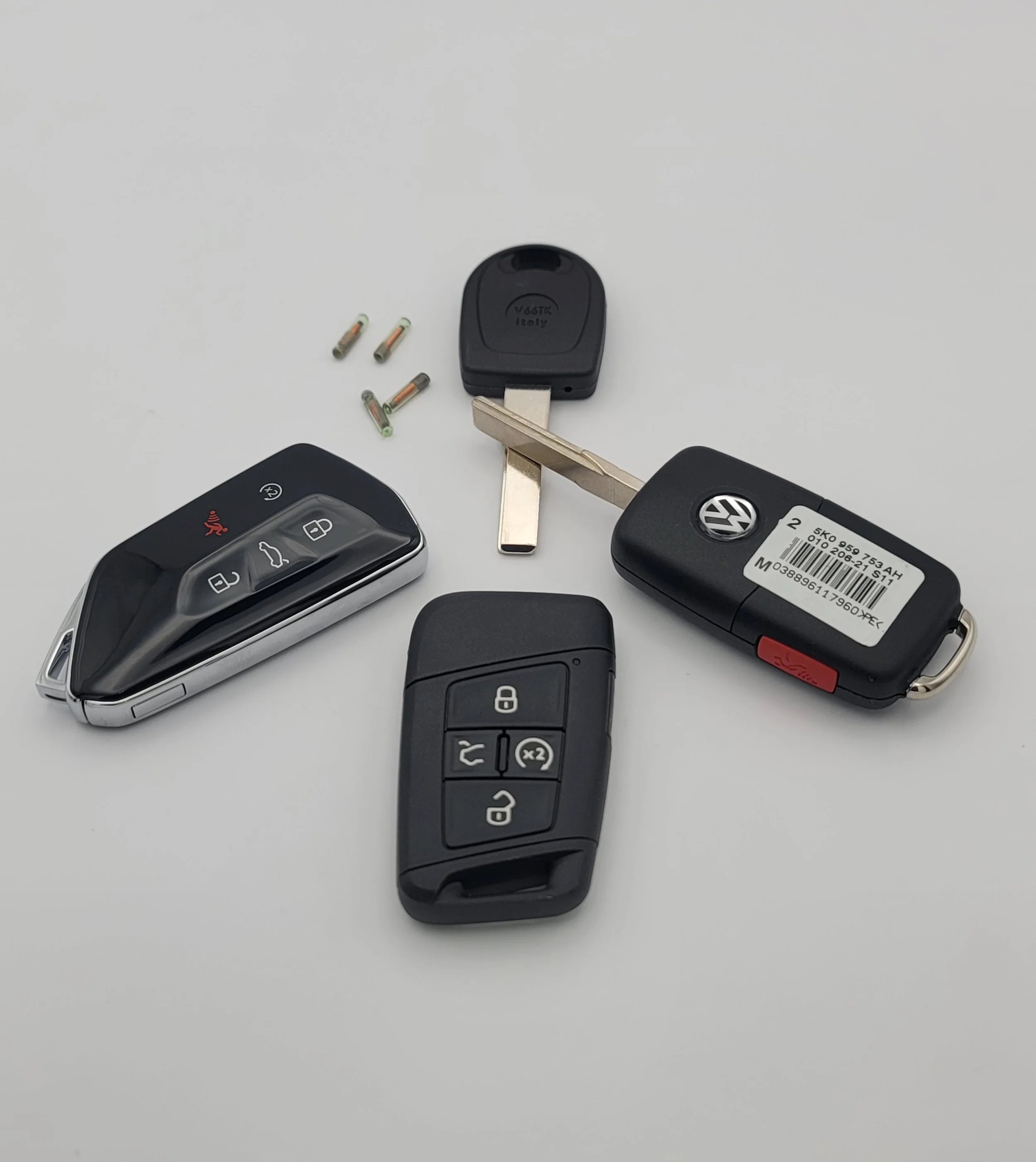
Volkswagen Keys and Remotes
VAG: Volkswagen Group, a large international corporation in charge of multiple car and truck brands, including Audi, SEAT, Porsche, Lamborghini, Bentley, Bugatti, Scania, MAN, and Škoda. Volkswagen Group's global headquarters are located in the historic town of Wolfsburg, Germany.
Volkswagen uses an advanced, multi-layered security layout consisting of a physical entry backup, radio frequency remote lock/unlock, a transponder immobilizer, and optional KESSY push-button start.
Key System Types:
Standard Remote Keyless Entry (RKE): Uses a traditional flip-out metal blade and a steering column ignition switch.
KESSY (Keyless Access / Push-to-Start): Allows passive entry and push-button ignition while the fob remains inside your pocket or bag.
Hidden Emergency Blade: Located inside modern smart fobs and flip keys to unlock the driver door manually if the battery dies.
Security and Immobilizer Architecture:
Component Security (CS): VW's encrypted anti-theft database matches a digital fingerprint unique to your specific car's modules.
Transponder Handshake: When turning the key or pushing start, the car verifies the encrypted code; if it fails, the engine cuts out immediately.
Dead Fob Override: If your KESSY fob battery fails, holding the key against the emergency designated spot on the steering column lets the car read the chip via an inductive backup coil.
Historical & Physical Key Forms
Volkswagen's physical blade profiles and fob shapes define the physical interface of the vehicle.
Classic Uncut Profile Blanks (1950s–1990s): Early air-cooled and water-cooled Volkswagens utilized single- or double-sided metal keys with distinct structural edge grooves. These were categorized internally by factory profile letters (such as T-profile, L-profile, or AH-profile). These keys lack built-in security electronics—they operate strictly via mechanical tumblers inside the lock cylinder.
The Switchblade / Flip Key (Late 1990s–Present): Introduced alongside the MK4 platform, this iconic style integrates a side-hinged HU66 laser-cut high-security blade that springs out at the press of a button. The base housing holds the remote keyless entry (RKE) buttons, while the upper plastic blade holder contains a hidden transponder pod.
Smart Proximity Fob (2010s–Present): Designed for modern push-button ignitions, these fobs communicate continuously over radio frequencies. They do not utilize an exposed blade to operate the ignition. A mechanical emergency backup blade is hidden inside the plastic body to unlock the driver's door manually if the vehicle or fob battery completely drains.
The Evolution of the Volkswagen Immobilizer (IMMO)
The electronic security layer behind the dashboard determines how keys are programmed, duplicated, or adapted. Volkswagen's security systems evolved through distinct generations:
Immobilizer Generation
Era/VehiclesCore
Chip Technology
Security Protocol & Notes
Immo 1 & Immo 2
Late 1990s – 2001 (Golf 4, Jetta 4, early B5 Passat)
Fixed-code / Early Megamos Crypto ID48 (T6)
Basic handshake. 4-digit PIN codes can be read over OBD or directly from an external immobilizer box/cluster. Keys do not require vehicle-specific precoding before learning.
Immo 3
2001 – 2006 (MK4 refresh, B5.5 Passat)
Megamos Crypto ID48 with CAN-Bus pre-coding (TP23)
Tied closely to Component Security (CS). The cluster, engine control unit (ECU), and transponder share synchronized CS bytes. Keys must be pre-coded to a specific VIN before they can be successfully introduced via a 5-digit PIN.
Immo 4
2005.5 – 2015+ (MK5, MK6 platforms, Tiguan, Passat B6)
Megamos Crypto ID48 / Megamos ID8E
Distributed immobilizer function. Data is split across multiple modules (e.g., Comfort Module or Instrument Cluster). Requires standard 7-byte or encrypted 12-byte/16-byte CS data structures. Keys are heavily locked once programmed.
Immo 5
2009 – 2019 (Premium architectures, Touareg, select Audi lines)
NXP Hitag-AES / Hitag-Pro
Migrated away from old Megamos glass chips to advanced NXP microchips. Features sophisticated rolling codes, encrypted transponder challenges, and relies heavily on central body control modules (BCM2).
MQB Platfrom (MQB48 / 5C)
2013 – 2020 (Golf 7, Tiguan, Atlas, Jetta MK7)
Megamos Crypto AES (MQB48 / ID88)
Highly decentralized cryptographic binding. Key synchronization requires extracting cluster EEPROM/IMMO data to build a dedicated dealer key via programming hardware.
Modern MQB (MQB49 / 5D)
2020 – Present (Golf 8, ID.4, 2021+ global platforms)
High-Security R7F/RHA Processors
Features strict SFD (Vehicle Diagnostic Protection) gateway firewalls. Requires specialized online tokens, certified tool authorization, or direct connections to the Volkswagen live server architecture to add or program keys.
Access and Comfort Entry Architectures
Regardless of the immobilizer chip architecture operating the engine, Volkswagen structures its user-facing entry systems into two foundational setups:
1. Remote Keyless Entry (RKE)
The classic standard configuration requiring active user intervention. Pressing the remote fob button transmits an ultra-high frequency (UHF) radio signal to the vehicle's central convenience module to lock or unlock the actuators. To start the vehicle, the physical key blade must be inserted into the steering column cylinder to manually turn the ignition switch.
2. KESSY (Keyless Access / Keyless Go)
Volkswagen’s passive entry and start architecture. It relies on a localized low-frequency (LF) antenna grid embedded inside the front door handles, rear liftgate, and passenger cabin.
Passive Entry: When you touch the inner capacitive sensor of the door handle with the fob in your pocket, the vehicle wakes up, pings the key, verifies its presence, and instantly releases the locks.
Passive Ignition: Once inside the cabin, interior antennas verify that the specific registered key is inside the perimeter, allowing the Engine Start/Stop button to crank the motor.
Passive Locking: Upon exiting, pressing the designated external dimple on the door handle triggers an exterior search ping; if the key is located outside the vehicle, the doors lock immediately.
Common VW Key & Immobilizer Fault Code
Volkswagen key and immobilizer-related fault codes usually point to transponder communication errors, weak key fob batteries, or faulty pickup/reader coils. Because these are manufacturer-specific body/instrument cluster codes, they require a VAG-compatible diagnostic scanner to read properly rather than a generic OBD-II engine reader.
The most common Volkswagen diagnostic trouble code (DTC) related to the key and immobilizer system is 01176 (Key), often accompanied by the sub-code Signal too Low or P1570 (Engine Control Module Disabled). This typically indicates that the car's immobilizer reader coil cannot properly read the transponder chip inside your key fob.
01176 – Key: Signal Too Low: The transponder signal isn't reaching the receiver strongly enough. Common causes are a weak or damaged transponder chip, loose wiring or a faulty connector at the reader coil, or interference from multiple keys on the same key ring.
01128 – Immobilizer Reader Coil: Fault in the physical antenna ring around the ignition switch.
00956 – Key 2 (or 00957 – Key 3): Adaptation or synchronization limit issues with the remote-locking buttons.
P0513 / 001299 – Incorrect Immobilizer Key: The key is unprogrammed, has an invalid transponder chip, or has lost its handshake synchronization with the ECM.
17978 / P1570 – Engine Start Blocked by Immobilizer: The Engine Control Module (ECM) refuses to let the car stay running because key authorization failed. Common causes are an unprogrammed key, failed handshakes between the instrument cluster and ECU, or an accompanying code 01176.
00668 – Supply Voltage Terminal 30 (Low Voltage): System voltage is too low to sustain proper module communication during key authentication.
B104A / B11D9 (KESSY / Push-to-Start Models) – Key Fob Battery / Antenna Failure: Push-button start systems (KESSY) store these codes when the interior antennas fail to detect the smart fob or when the fob battery is critically depleted.
Do I have to go to the dealer to duplicate my Volkswagen car key?
No, you do not have to go to a Volkswagen dealership to duplicate your car key. Depending on your vehicle’s model year, you can save time and money by using a specialized automotive locksmith. A locksmith company like Automotive & Commercial Locksmith Inc. can offer better prices and convenient mobile services for cutting and programming new keys, including in situations where all keys have been lost or key fobs are damaged.
Disclaimer: Volkswagen electronic-key systems vary by model, model year, market, and equipment. DTC definitions, emergency-start procedures, key types, programming requirements, and component locations should be verified using the appropriate Volkswagen service information for the specific vehicle. This article is provided for general informational purposes and should not replace the manufacturer's diagnostic or repair procedures.
Call Automotive & Commercial Locksmith Inc. Store to get a key for any Volkswagen, Audi, Lamborghini, or Bentley today.
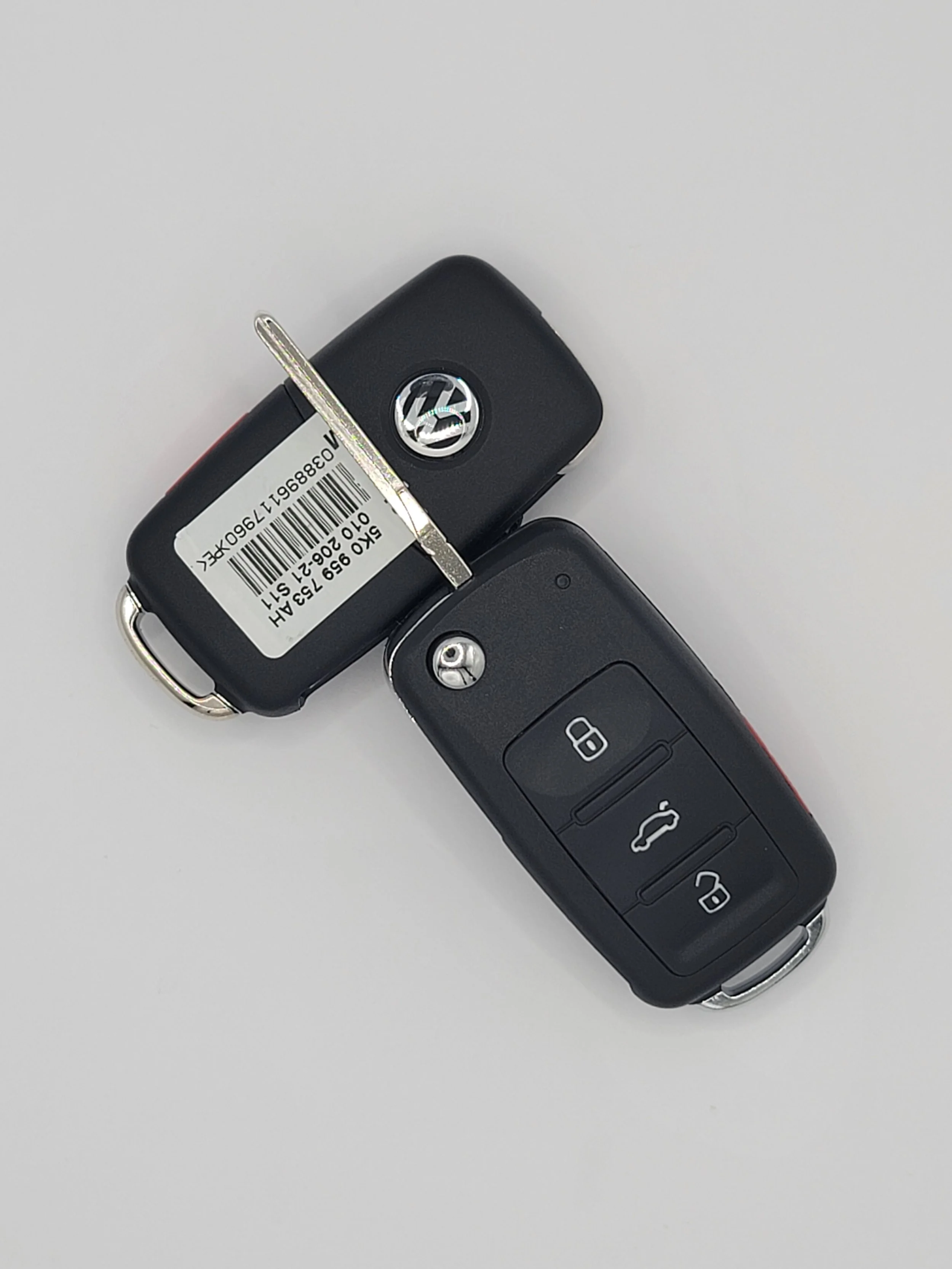
VW Flip Keys
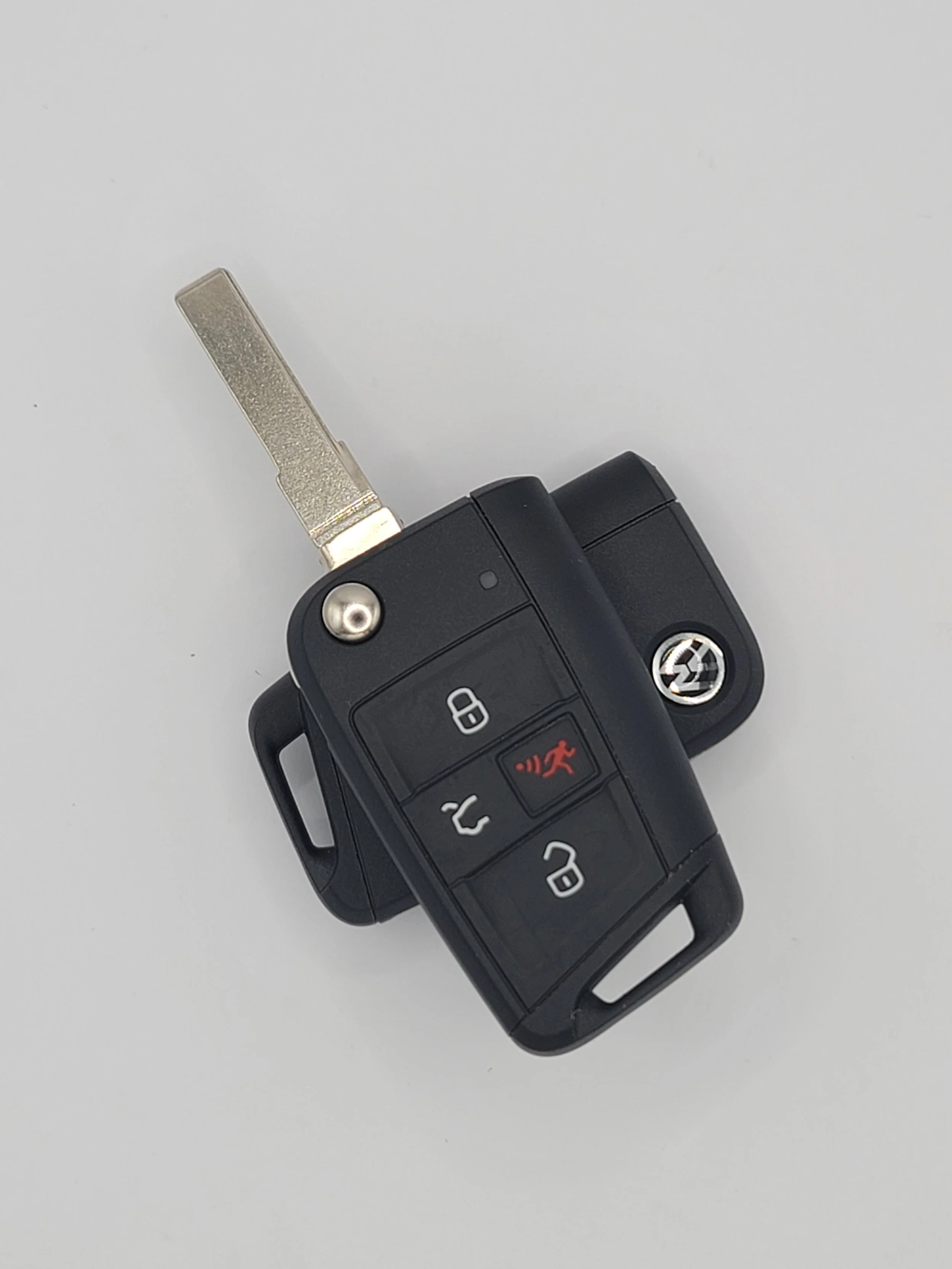
VW Keyless Entry Remote Key
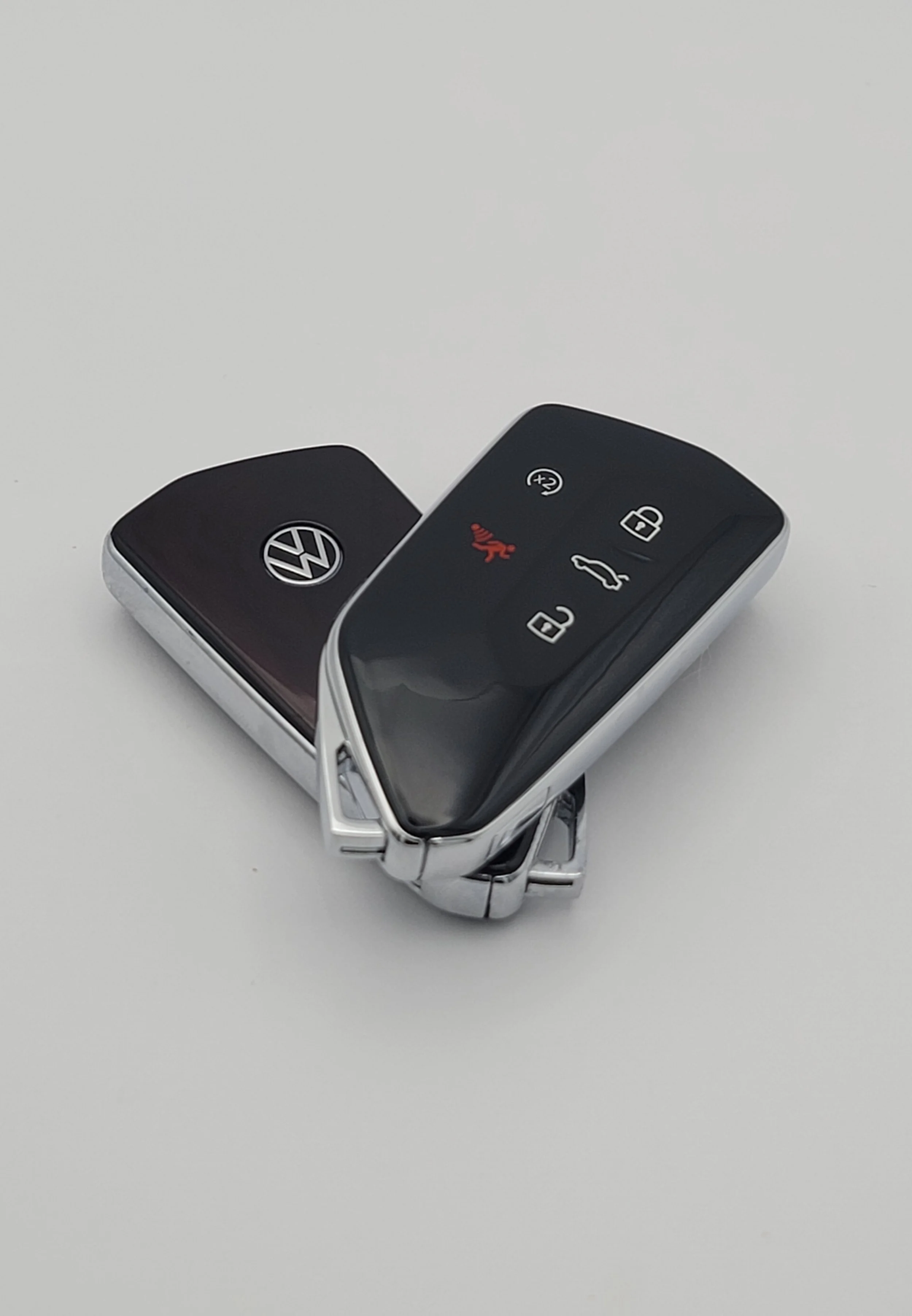
Volkswagen Keyless Go Key Fob
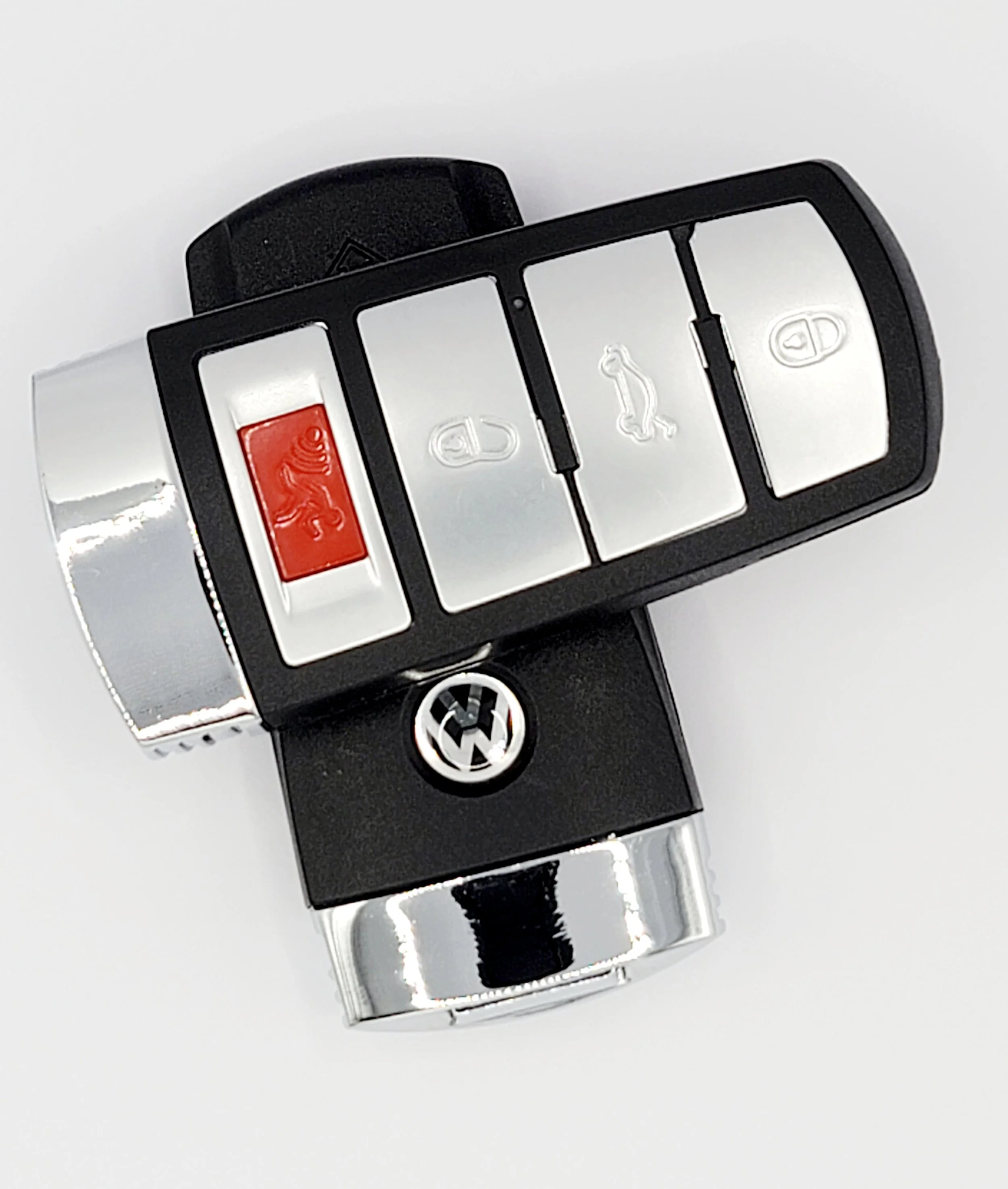
Volkswagen remote slot key fob
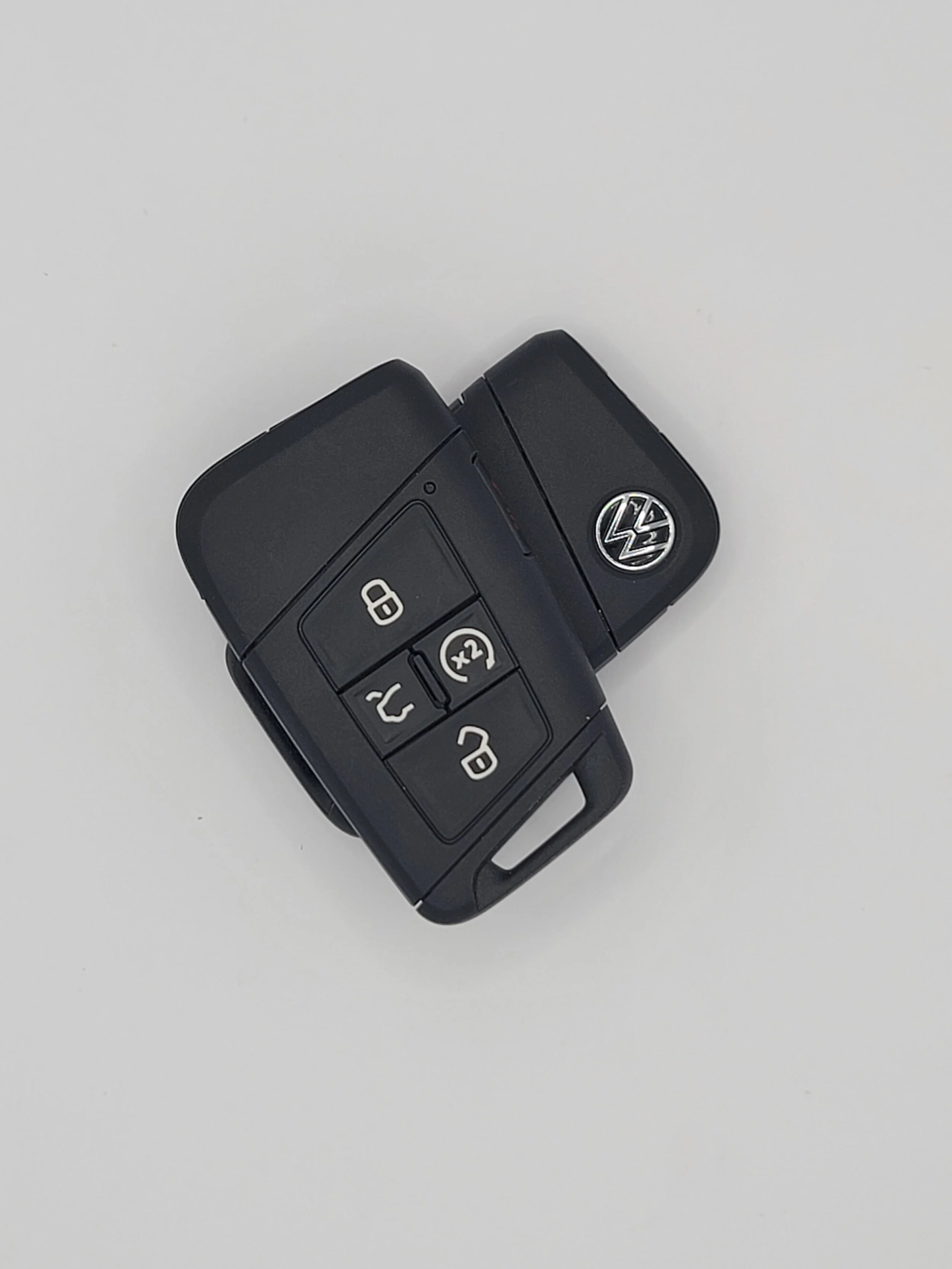
VW Keyless Entry Fob