Radio Frequency Identification (RFID): What is it?
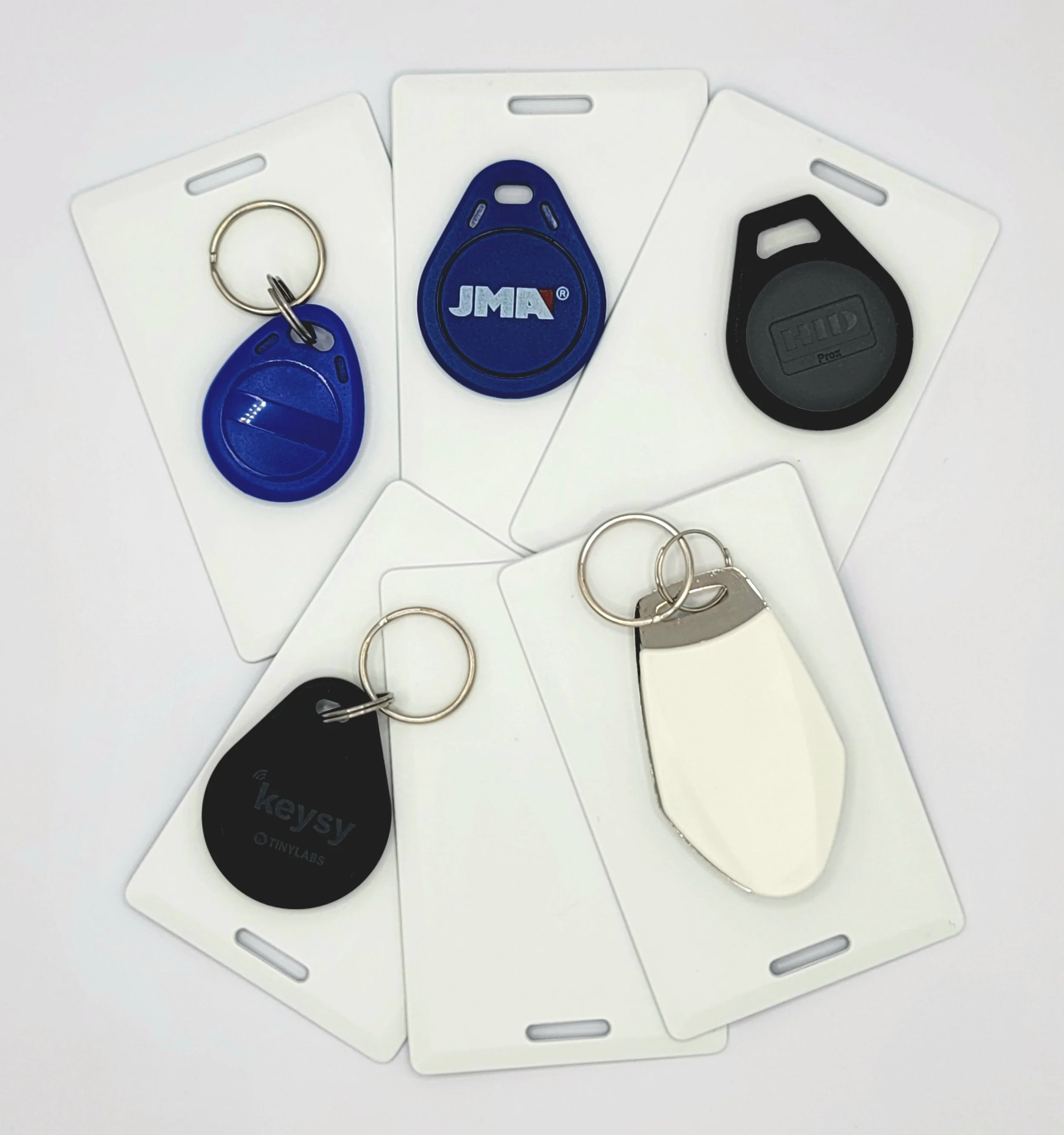
Radio Frequency Identification (RFID) Key Fobs and cards
Radio Frequency Identification (RFID) refers to a wireless system comprised of two components: tags and readers. The reader is a device that has one or more antennas that emit radio waves and receive signals back from the RFID tag. Tags, which use radio waves to communicate their identity and other information to nearby readers, can be passive or active. Passive RFID tags are powered by the reader and do not have a battery. Active RFID tags are powered by batteries.
RFID technology has been commercially available in one form or another since the 1970s. It is now part of our daily lives and can be found in car keys, employee identification, medical history/billing, highway toll tags and security access cards.
RFID tags can store a range of information from one serial number to several pages of data. Readers can be mobile so that they can be carried by hand, or they can be mounted on a post or overhead. Reader systems can also be built into the architecture of a cabinet, room, or building.
RFID systems use radio waves at several different frequencies to transfer data. In health care and hospital settings, RFID technologies include the following applications: Inventory control, Equipment tracking, Out-of-bed detection and fall detection, Personnel tracking, Ensuring that patients receive the correct medications and medical devices, Preventing the distribution of counterfeit drugs and medical devices, Monitoring patients, Providing data for electronic medical records systems.
The United States government uses two types of RFID technology for border management—vicinity and proximity:
Vicinity RFID-enabled documents can be securely and accurately read by authorized readers from up to 20 to 30 feet away.
Proximity RFID-enabled documents must be scanned in close proximity to an authorized reader and can only be read from a few inches away.
RFID Key Fobs and cards are used as well in:
Access Control Systems: Commonly found in security systems for buildings, offices, and other restricted areas, allowing for controlled entry based on user credentials.
Time and Attendance Systems: Used for tracking employee attendance and managing workforce data.
Identification Systems: Employed in various identification applications, such as employee badges, membership cards, and visitor management.
These systems operate at different frequencies—low, high, and ultra-high—depending on the required range and application. Common uses include contactless credit cards, inventory management, highway tolls, and supply chain tracking.
Active and passive RFID chips:
There are 5 main frequencies
Low 125, 134 khz
Hi 13.56 MHz
Ultra-High 433, 866-960 MHz
Super-High 2.45-5.8 ghz
Ultra-Wide 3.1-10 ghz
For each frequency there are different models. Low frequency models have normally less security functions and also shorter range.
Most common LF RFID models (Low frequency typically 125 kHz)
HID Poxi
HID Indala
Paradox
AWID
T55xx
Pyramid
Most common HF RFID models (High frequency typically 13.56 MHz)
iClass
NTAG
Mifare:
Mifare Classic 1k / 4k
Mifare Ultralight
Mifare Pro / ProX
Mifare Desfire / SAM / EV1 / EV2 / EV3
Some models are encrypted others are not.
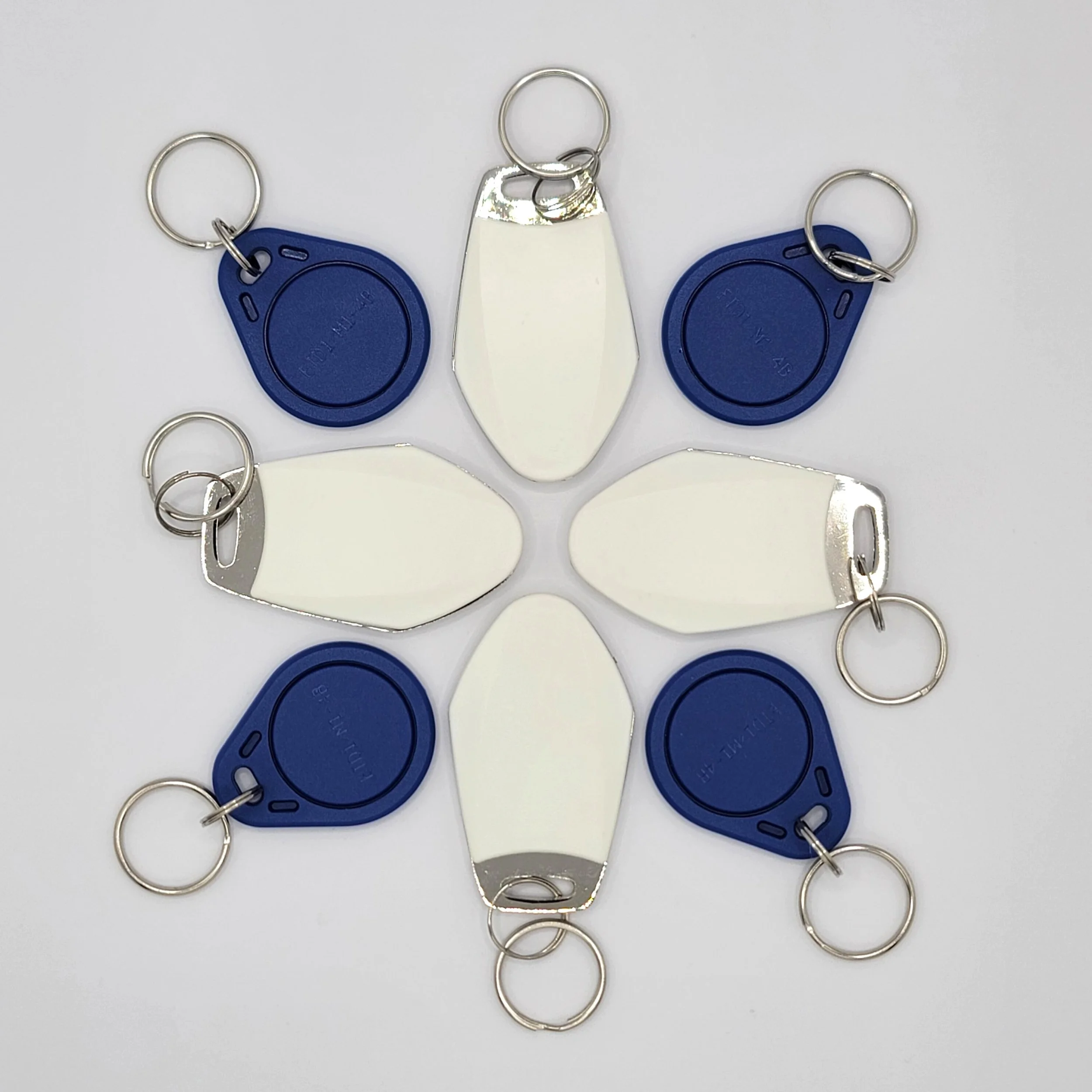
Radio Frequency Identification (RFID) Key Fobs
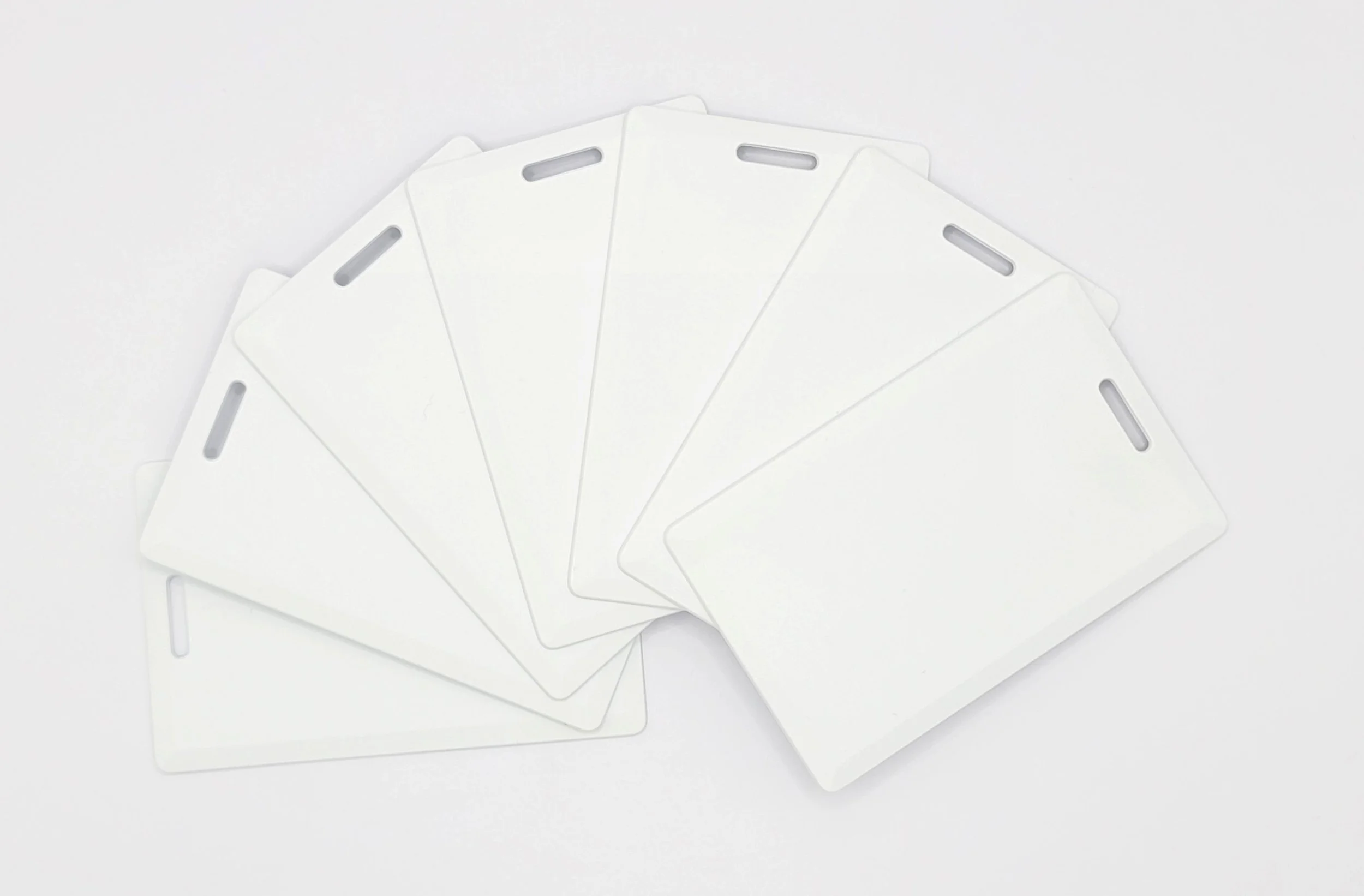
Radio Frequency Identification (RFID) Key cards